

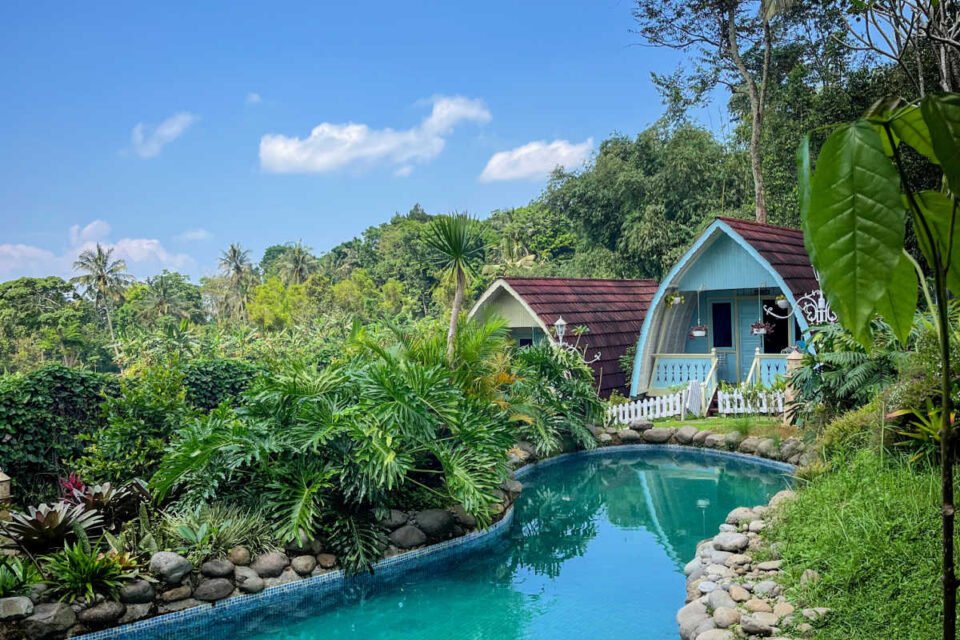
Bali Cracks Down On Illegally Operating Vacation Villas: Everything Tourists Need To Know
Vacation villas in Bali are one of the most popular accommodation options for holidaymakers visiting the island.
Villas have also been a go-to investment for local and international property developers and entrepreneurs looking to get in on Bali’s tourism boom.
As more villas have popped up left, right and center, especially over the last five years, so too have the number of building and business permit violations.
Leaders in Bali are on a mission to crack down on illegally constructed and illegally operating private rental villas all across the province. The crackdown comes in a number of different directions.
The authorities are working to ensure that all villas have been constructed in accordance with building permits and spatial planning laws, as well as ensuring that everything is above board in terms of business operations, too.
There have been concerns from leaders that there are potentially thousands of illegally operating villas in Bali, which pose a threat to the local economy as well as the environment, and in some cases, public safety.
The Bali Villa Association (BVA) has been calling on the government to do more to bring standardisation to the villa industry in Bali. This week, the organisation has been speaking to the media about the need to improve licensing and tax compliance amidst the rapid growth of tourist accommodation in Bali.
Speaking to reporters, Ismoyo Sumarlan, the Chairman of the Bali Villas Association (BVA), explained that legality remains a challenge for villa businesses.
He touched on how a range of changes to licensing regulations in recent years have made it difficult for some businesses to align their legal documents.
Main Article: Bali Illegally Operating Villas
 This means that there are two kinds of businesses that are operating illegally: those who are out-and-out breaking the law, and those who simply haven’t kept up with changing legislation but who want to be operating above board.
Political leaders in Bali have also been vocal about their concerns for these kinds of violations, citing that tax revenue has been negatively impacted.
Sumarlan told reporters, “Previously, villas had two sins: not having permits and not paying taxes. At that time, permit amnesty was implemented, requiring them to have a Taxpayer Identification Number (NPWPD). After that, hotel and restaurant tax revenue increased significantly.”
Sumarlan echoed sentiments shared by Indonesia’s Deputy Tourism Minister, Ni Luh Puspa, from earlier this month. She told the media that the Ministry of Tourism wants to support villa owners in getting their businesses in order, not punish those who have been left behind.
Though she was clear that those who were breaking the law outright would be brought to justice.
Sumarlan explained, “BVA is ready to assist members who experience difficulties in the licensing process. In addition, we must also work together to face the various challenges of the tourism industry influenced by global conditions.”
All of this should bring more peace of mind to tourists who are looking to book private vacation villas in Bali.
There has been plenty of speculation online that villa rental listings would disappear from booking platforms or that properties would be closed down, leaving tourists in the lurch. That is not the case.
These reforms are hoped to help enforce existing laws to protect tourists, legitimate businesses, and generate more tax income.
More changes could be on the horizon, too, which should help tourists be even more discerning in their holiday villa rental booking process.
Last week, the Bali Villa Rental Management Association (BVRMA) formally proposed that Bali implement a hotel-style star rating system for the island’s privately owned holiday villas.
The BVRMA Chairman, Kadek Adnyana, told reporters that the proposal is still in the review stage.
Though he confirmed that his team is working with Bali’s universities to develop classification standards that will serve as a reference for tourists to help clarify villa quality standards, amenities, and pricing for tourists and investors. Watch this space!
Main Article: Bali Illegally Operating Villas
Bali Tourists’ Vacation Spending
Weakening Rupiah & Rising Fuel Costs Are Impacting Bali Tourists’ Vacation Spending
The conflict in the Middle East is affecting people around the world in both small and big ways.
As we live in a global economy dependent on fuel, the conflict is impacting everything from food costs to travel costs and even travel experiences, no matter where we are in the world.
There has been an uproar across Indonesia over the last month amid an economic climate that has caused the Indonesian Rupiah to continue weakening against the US dollar.
While in the first instance this was good news for tourists, with a weakening rupiah meaning that vacation budgets could go further and buy more, over the last week the economic fluctuations have found a new sense of balance.
With fuel costs rising in Bali and around Indonesia, it was only a matter of time until these costs had to be passed on to consumers, including tourists. That time has come.
The beginning of June has seen a price hike for Pertamax and Pertamax Green fuel, which is being felt across the tourism sector. As of 10th June 2026, the price of Pertamax (RON 92) has increased from IDR 12,300 per liter to IDR 16,250 per liter, an increase of 32%.
Then, Pertamax Green (RON 95) has increased from IDR 12,900 to ID 17,000 per liter. These are huge price spikes that are impacting just about every household on the island, and businesses are starting to feel the pinch, too.
At the moment, Bali’s tourist arrivals figures, for both international and domestic tourists, are stable. Leaders are looking ahead to the potential decline in the number of arrivals from the Middle East as airspace closures and flight cancellations continue to influence travelers’ holiday plans.
Leaders in Bali are already planning marketing campaigns to encourage more holidaymakers from Australia, New Zealand, China, India, and other areas of Asia.
There were hopes that this would help keep the economic situation stable and sustainable for both tourists and tourist businesses in Bali and Indonesia’s top destinations, but the updates coming from tour operators in Bali this week suggest that may not be the case.
Main Article: Bali Illegally Operating Villas

Local Bali tour operator Erna Saenah told reporters that the increase in fuel costs will directly impact the cost of tourist transportation, which is one of the most costly components of any travel package. Price caps on fuel have also ended this month, which is another reason why the prices have rocketed.
Saenah explained, “Since the restrictions on subsidies and the increasing difficulty in obtaining subsidized fuel, most tourist transportation vehicles have switched to Pertamax. So today’s increase is certainly very noticeable and quite heavy for us.”
Saenah added, “Even with the efficiency measures, tourists have already decreased. Furthermore, airfare increases have caused some groups to cancel trips. Now, the increase in Pertamax will automatically affect the selling price of tour packages.”
She added, “When it comes to guests, around 50 percent of the package cost is transportation. With this fuel increase, the selling price of transportation will definitely increase.”
She warned tourists to expect prices to be elevated, and not only for tours and transportation, but for food and services too.
Transportation costs will impact hotel and restaurant services, including the delivery of supplies. She shared, “Food suppliers to hotels will certainly be affected. If distribution costs increase, selling prices to hotels will increase, and ultimately hotel room rates will also increase.”
Saenah shared her concerns with reports, concerns that are echoed by many in the sector that we have heard from in the last few weeks.
She noted, “We just finished participating in the tabletop and Bali and Beyond Travel Fair (BBTF). We’ve already released our prices and distributed them to agents outside of Bali for the next year.”
“With this sudden increase, we’re still unsure what steps to take, as clients aren’t necessarily willing to accept the price adjustment.”
Tourists traveling to Bali in the coming weeks and throughout 2026 can expect to find that they receive a higher than usual exchange for their vacation budget, but that the cost of everything will slowly start to increase too.
Main Article: Bali Illegally Operating Villas
Bali Tourist Visa Categories
Bali Immigration Office Outlines Do’s And Don’ts Of Most In-Demand Tourist Visa Categories
There are many different reasons why travellers may visit Bali.
Some may come purely for vacation, others will come to visit family and friends, while others may come to volunteer, to create content, conduct a few business meetings, and take the time to add on some extra leisure days to make the most of the trip.
While these all feel pretty similar at first glance, for Indonesian immigration, each of these activities is very different indeed and requires a different visa category for each stay.
Here at The Bali Sun, we have been reporting all year about Indonesia’s Immigration’s mission to crack down on visa violations. In fact, there has been a concerted effort from the Indonesian Immigration to tackle immigration crime since borders opened after the pandemic.
Over the last 6 months, there has been a real focus on unpaid work. Indonesia Immigration has been working to eliminate any violations that have fallen in the so-called ‘grey area’ of unpaid work, with a specific focus on content creators and influencers, freelance service providers, and stay-for-free style skills exchanges.
There has been a separate focus to eliminate violations of the pre-investment and investment visas, as well as cracking down on those violating the terms of the remote worker visa, aka the digital nomad visa.
Indonesia Immigration and the regional immigration offices across Bali have been sharing updated information this week for tourists, travellers, and foreigners planning on coming to the island for these kinds of stays.
Through a series of helpful information, Indonesia Immigration has made it crystal clear for foreigners, and there are hopes that now that this information is spread even more widely, all foreigners will enter the country on the correct visas and honor the conditions of their stay permits.
None of this information is new; it has been widely available and easy to find on the Official Indonesia Immigration website, and available in English, French, Mandarin, and a number of other languages.
Main Article: Bali Illegally Operating Villas

It is evident that the Indonesian Immigration wants to leave tourists with no excuses for not knowing the rules by sharing this information in its clearest and simplest form on social media.
The Do’s and Don’ts Guide for Indonesian Visas covers the C5A, C6, and E33G. Before we dive into the nuances of the C5A, C6, and E33G, here at The Bali Sun, we thought now is a good moment to review the tourist visa on arrival.
The standard Tourist Visa on Arrival, known as the B1 and referred to as the eVOA, is a single-entry stay permit that is valid for stays of up to 30 days.
It costs IDR 500,000 per person and can be extended one time for an additional 30 days via the Hybrid Application Process.
The C1 is another category of tourist visa; it is a single-entry visa that allows for stays of up to 60 days. The D1 Tourist Visa is ideal for those who travel to Indonesia regularly for family and leisure travel purposes, with sub-categories offering validity of 1, 2, and 5 years.
For most tourists who are visiting Bali or other areas of Indonesia for vacations and travel, these are the most appropriate visa categories.
The C5A, C6, and E33G are for those who want to stay in Bali for a number of different reasons. The C5A Content Creation Visa is specifically for influencers and content creators.
The list of do’s and don’ts for this visa category is very simple. Do: engage in activities related to social media content creation. Engage in activities related to tourism, purchasing goods, and visiting family and friends.
The Don’ts are just as clear. On the C5A Content Creation Visa, foreigners must not: overstay the visa or stay permit period in Indonesia; engage in the sale of goods or services; receive salaries, wages, or rewards from individuals or companies in Indonesia; create social media content related to journalism or filmmaking that requires special permits.
The C6 Social Activities Visitor Visa is designed for those visiting Indonesia to ‘engage in social, humanitarian aid, and volunteer activities in Indonesia’.
The Do’s are also very simple: engage in activities related to social work, providing humanitarian aid, related to volunteer programs, related to tourism, purchasing goods, and visiting families.
Much like the C5A, the C6 visa stipulations are very straightforward; do not overstay and do not engage in the sale of goods or services, receive salaries, wages, or rewards from individuals or companies in Indonesia.
The E33G Remote Worker Special Residency Visa is designed for remote workers who are employed by companies based outside of Indonesia and perform their work within the Indonesian territory.
The Do’s as outlined by Indonesia Immigration state that visa holders must conduct work activities only related to overseas companies, are allowed to bring family to live in Indonesia in compliance with immigration regulations, are permitted to enter/exit Indonesia during the validity of their visa, and can travel for leisure purposes, purchase goods, and visit family and friends.
The Don’ts for the E33G are simple: no overstaying, no selling of goods and services, and no performing activities other than those authorized by their activity description unless they have applied for concurrent activities or a change in activity type.
Foreigners who are seeking support from the Indonesian Immigration can find plenty of useful information on the Official Indonesia eVisa website, across the social media accounts, and via the live chat available on the website.
___________________________________________
Main Article: Bali Illegally Operating Villas
All above articles are provided by “The Bali Sun”
Please check frequently or weekly Special Cake Offer!