


Bali Tourism Tax Funds Is Corruption-Free
Bali Tourism Tax Funds Levy has been in effect for three years now, yet ask the average tourist about the policy, and they’ll stare at you blankly.
Even if they did know what the policy was, could any of us point to what the funds have been spent on?
The Governor of Bali, Wayan Koster, has given updates about the tourism tax and confirmed that the policy remains corruption-free.
It is the time of year when governments across Indonesia are looking at annual budgets, and Bali is no exception. Bali’s Governor Koster has emphasized that the Bali foreign tourist levy (PWA) imposed by the Bali Provincial Government is managed transparently and is free from corruption in terms of management and spending.
Although the tourism tax should be generating billions of rupiah for the provincial government, Governor Koster is now also encouraging the need for a new funding scheme amidst limited Regional Original Income (PAD).
According to Governor Koster, Bali is not generating sufficient tax revenue to support government programs and development projects. He told reporters that the main sources of local revenue (PAD), such as motor vehicle tax (PKB) and vehicle title transfer fees (BBNKB), are considered unsustainable due to their potential to exacerbate traffic congestion on the roads, which is one of Bali’s most far-reaching issues.

He explained, “Because we only have a regional budget (APBD), with very little PAD. The sources are the same: PKB and BBNKB. If we continue to push them, there will be more cars and traffic jams. That’s not a positive prospect. We must have another scheme now.”
One way the Bali Provincial Government had hoped to mitigate this issue was created during Governor Koster’s first term in office. The Bali Tourism Tax Levy was introduced on the 14th February 2023. The tax was set at IDR 150,000 per international tourist to the island.
While it was set to generate billions in revenue to help Bali conserve culture, protect nature, and level up infrastructure, three years in, it doesn’t appear to have been the silver bullet that leaders had hoped it would be. Not least since, even now, so few tourists are aware of the tax, and even fewer pay.
Data shows that by the end of 2024, the number of tourists paying the Bali Tourism Tax reached approximately 2.1 million, or 32% of the total 6.3 million visits, generating IDR 318 billion.
Looking at the data for last year, which is still being totted up, the figure is expected to increase to around 2.4 million people, or 35% of the total 7 million international tourists, generating IDR 369 billion. Governor Koster explained, “This is not yet optimal, but I assure you there will be no corruption. Payments will be cashless and digital.”
He noted that the issue lies in the small number of tourists paying, and not that funds are being skimmed and syphoned off in some kind of corruption scheme.
Governor Koster explained that even three years in, there is still insufficient cooperation and communication from hotels and travel agents to ensure that tourists pay their fees. He noted, “Our weakness is that we must involve relevant parties, such as hotels and travel agents. This is what we are currently pushing for.”
Governor Koster said that speculations about corruption haven’t helped the government in encouraging tourists to pay the mandatory IDR 150,000 fee. He shared, “Now we’re being bombarded on social media, with allegations of misappropriation. The impact is immediate, with a decrease in PWA payments. In the past three months, this has decreased.”
“In the past three months, we only received IDR 64 billion in PWA, a small decrease compared to the previous three months. It’s a shame, because this is an extraordinary breakthrough, going from nothing to something, from not being allowed to being allowed.”
He has now called for a sector-wide commitment to cooperate and communicate the Bali Tourism Tax to tourists, noting. “This must be explained to the public so they aren’t poisoned by rumors of misappropriation.”
There have also been calls to make it easier for tourists to pay the fee by integrating payment into the online visa application process or via airline ticket purchasing systems.
He added, “I’ve met with the Minister of Law, the Minister of Immigration, and the Finance and Development Supervisory Agency (BPKP), and they’re all supportive. However, there are regulatory hurdles at the higher levels that need to be resolved.”
He conceded, “We can’t rush it, because the authority lies with other agencies. But we’re continuing our efforts. Our job is to work, work, work. Don’t waste time managing social media.”
For tourists traveling to Bali, the best way to make the Bali Tourism Tax Levy payment is via the LoveBali website or app. Here at The Bali Sun, we feel it’s easier to access the payment portal via desktop, and users must remember that all VPNs and ad blockers must be deactivated. It is important to keep the QR-code voucher issued after payment close by throughout the trip to Bali, in case stopped by Tourism Task Force Officers.
(Main Article: Bali Tourism Tax Funds)
Bali New Digital Payment
Traveling in Bali is getting easier by the day. From 5G connectivity to apps for transport and travel, it has never been easier to explore the island.
A new digital payment system, rapidly adopted by international travelers, is making it easier than ever to spend and experience Bali with just the click of a button.
The QRIS system is a QR-code-based digital payment system that allows international travelers to pay using their home currency on their smart devices.
The system has been widely adopted by travelers from Malaysia, Thailand, and Singapore and looks set to be rolled out to more of Bali’s top international visitors.
The Head of the Bank Indonesia (BI) Bali, Erwin Soeriadimadja, told reporters that data shows that inbound cross-border QRIS transactions from Malaysia increased by 196% year-on-year, followed by Thailand at 183%, and Singapore at 156%.
With this payment technology saving tourists both time and money, it seems a no-brainer for Bank Indonesia to roll out the service to more potential users.
Soeriadimadia told reporters, “Bank Indonesia continues to expand the use of QRIS Cross Border through collaboration with various transaction service providers in tourist areas, while service expansion is currently being tested in China and South Korea.”
This convenient system means that international tourists visiting Bali no longer need to exchange or carry cash. Tourists can simply use their home country’s payment app for transactions at hotels, restaurants, and souvenir shops, with an automatic conversion system to rupiah that goes directly into the merchant’s account.
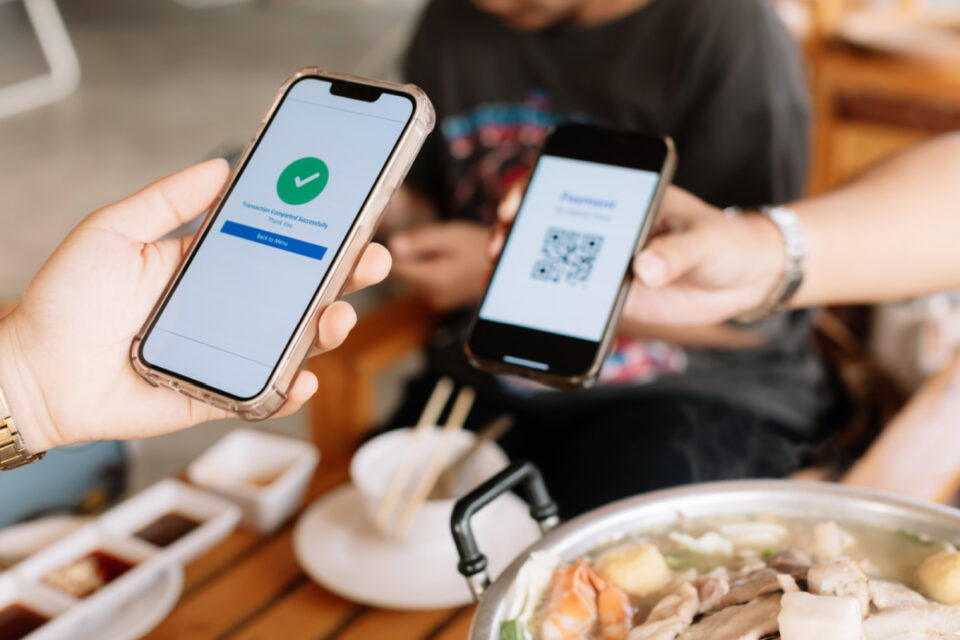
With most tourists and holidaymakers sticking very much to the beaten path, and many tourists visiting Bali for short, all-inclusive tour visits, an increasing number of tourists do not even need to carry cash for those unforeseen or off-path moments.
Soeriadimadia explained that QRIS has further solidified its position as a game-changer in the payment system in Bali. Throughout 2025, QRIS transactions reached 172 million with 1.1 million users. By December 2025, the number of merchants had reached 1 million and is targeted to increase to 1.1 million by 2026.
QRIS is being used by both big and small businesses, and even solo entrepreneurs are able to get the system up and running. Bank Indonesia Bali will also continue to promote payment digitalization to support the national target of 140 million QRIS merchants by the end of 2026.
Bank BPD Bali President Director I Nyoman Sudharma explained to reporters that the expanded adoption of QRIS Cross Border provides a practical and efficient cross-border payment solution for tourists.
He noted, “Digital innovations like QRIS Cross Border and NFC are strategic bridges to ensure that every transaction made by foreign tourists in Bali can be directly felt by businesses, even in remote villages, efficiently and securely.”
The QRIS System has also been a game-changer for Indonesian nationals, who can now use the cashless system to pay for everything from groceries to utilities.
It may be some time before the QRIS System is rolled out for tourists from Australia, Europe, and around the world, but the rapid adoption and scaling of the network is being deemed a positive sign.
Main Article: Bali Tourism Tax Funds