

Bali Governor Wayan Koster and Minister of Transportation Dudy Purwagandhi recently discussed programs to strengthen air, sea, and land transportation in Bali. Also attending were Buleleng Regent I Nyoman Sutjidra, Klungkung Regent I Made Satria, Karangasem Regent I Gusti Putu Parwata, and Badung Regent, represented by the Head of the Badung Regency Transportation Agency.
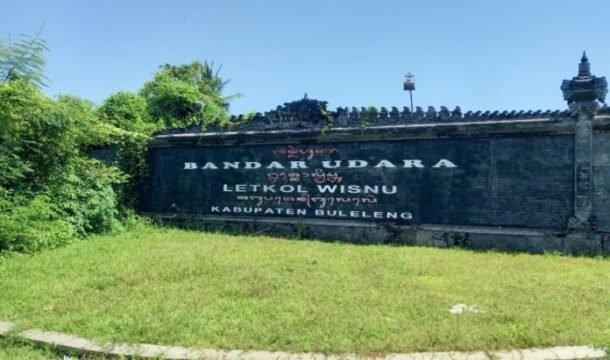
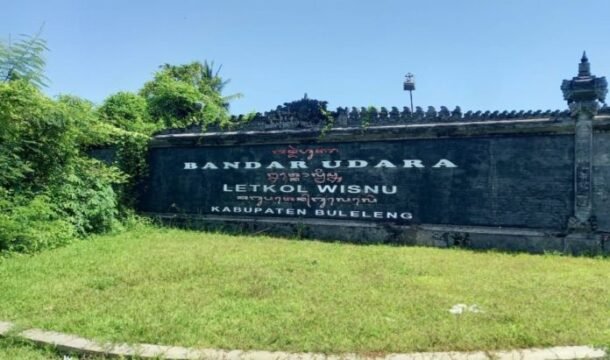
The meeting, held on Thursday, 09 July 2026, in Denpasar at the Kertha Sabha Meeting Room of Jayasabha, the Governor’s Official Residence, reached a consensus. Minister of Transportation Dudy Purwagandhi supported Governor Wayan Koster’s proposal to develop the small Letkol Wisnu Airport in Buleleng Regency into a dedicated airport to ease the burden on air transportation services at I Gusti Ngurah Rai International Airport.
Second, the discussion covered revitalizing Celukan Bawang Port in Buleleng Regency by providing RoRo (Roll-On/Roll-Off) ship service to ease congestion between Denpasar and Gilimanuk during the holiday season and the Eid al-Fitr homecoming.
Third, the discussion covered supporting the development of Kusamba Port in Klungkung Regency, Amed Port in Karangasem Regency, and Sangsit Port in Buleleng Regency. Fourth, it covered the creation of a Water Taxi transportation system in Badung Regency, connecting Bali’s I Gusti Ngurah Rai Airport and Canggu, North Kuta, to reduce congestion and travel time from 1.5 to 2 hours to only 30 minutes.
Regarding Letkol Wisnu Airport in Sumberkima, Buleleng Regency, Governor Koster explained that his administration plans to develop it into a dedicated airport for special needs, such as emergency landings if problems arise at Ngurah Rai International Airport, as well as private jet services, charter flights, logistics, and equipment. These plans would automatically entail a major upgrade of the airport, including strengthening and extending the 1,400-meter runway.
Governor Koster has asked that a registered business entity be established to acquire the land needed for the airport’s expansion. Accordingly, the Governor has declared he is open to forming a commercial partnership with an investor to upgrade and operate the airport in the future.
”Therefore, we hope Letkol Wisnu Airport can address Bali’s air traffic problems. We haven’t yet considered establishing a commercial airport like Ngurah Rai Airport. Because Bali is small, we must prevent the erosion of productive land and the threat to food cultivation and the existing subak ecosystem. This is also part of realizing quality tourism in Bali,” Governor Koster said.
Meanwhile, Indonesia’s Minister of Transportation, Dudy Purwagandhi, emphasized his deep concern about transportation issues in Bali. He said the Island of the Gods remains a magnet for global tourists.
The Minister of Transportation is aware of the limited capacity of Ngurah Rai Airport and the inadequate sea crossing capacity, which, together with the high number of travelers coming to Bali, results in significant traffic congestion. Therefore, Letkol Wisnu Airport will be offered as an investment project for air transportation.
This represents an expansion of the existing airport. We hope it can be realized so that North Bali can develop like South Bali. I will conclude the discussion on Kubutambahan and other areas, and ensure that Letkol Wisnu, Buleleng, remains our focus, because the area is relatively clear and there are no longer any land issues, including environmental obstacles,” the Minister of Transportation said.
Regarding maritime infrastructure, the Minister of Transportation stated that his office has requested that Pelindo – the State-owned seaport operator, which owns Celukan Bawang Port, revitalize it so it can accommodate crossings from Jangkar and Banyuwangi, both in East Java.
For Amed and Sangsit Ports, both in Northern Bali, the government plans to offer the land for private development. This would allow these locations to be developed as logistics terminals or put to other yet-to-be-determined uses.
Most importantly, these ports, including Kusamba and Klungkung, must be developed. They could become distinct tourism destinations.
Regarding plans for a Water Taxi program in Badung Regency, the Minister of Transportation, Dudy Purwagandhi, hopes that the facilities in the Ngurah Rai area will be completed by November 2026.
However, construction is still awaiting the Ministry of Public Works’ (PUPR) beach normalization in the area. Some observers have also asked whether plans to create a water taxi system connecting Ngurah Rai International Airport and the Canggu area will include breakwaters for safe water landings along the shoreline, which is now open to the sea.
”Hopefully, this can be realized as an alternative transportation option to alleviate traffic congestion in Canggu,” the Transportation Minister said.
President Supports Privately-Funded Airport for North Bali
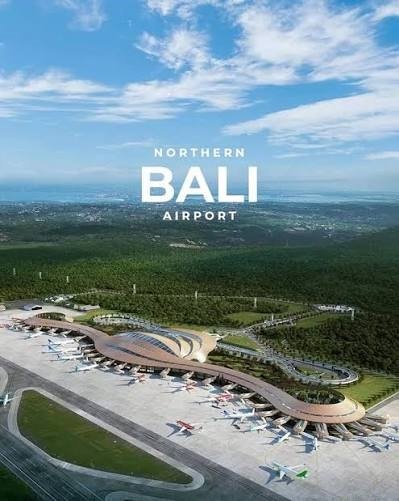
Indonesia’s President Prabowo Subianto is calling for an accelerated approach to the construction of an airport in Bali’s north.
The North Bali Airport would be located in the Kubutambahan area of Buleleng Regency and is part of a larger government strategy to geographically diversify economic activities in Bali by creating new growth centers that will result in a more equitable pattern of development.
Growing current support for the airport project emerged following a meeting between President Prabowo Subianto and the President Commissioner of PT Pembangunan Bali Mandiri (Pembari), Baringin Panggabean, at the Presidential Retreat in Hambalang, West Java, held on Tuesday, 14 July 2026. State Secretary Prasetyo Hadi also attended the West Java meeting. The meeting’s agenda reviewed a presentation regarding the North Bali Airport Project, which now forms a part of the 2025–2029 National Medium-Term 5-year Development Plan (RPJMN) as stipulated under Presidential Regulation Number 12 of 2025.
PT Pembangunan Bali Mandiri (Pembari) is a company established to develop modern aviation infrastructure in North Bali.
President Prabowo has expressed his support for the swift realization of a North Bali Airport that he views as a strategically important project. What would become, once built, Bali’s second international airport is viewed as vital and increasingly urgent due to the increasing number of tourists visiting the Island and the fact that the Gusti Ngurah Rai International Airport in south Bali is nearing the limits of its carrying capacity. The successful operation of the new airport in the northern region of Bali is targeted to reduce the operational burden on Ngurah Rai Airport while also easing access to tourism destinations in the North Bali region.
In reviewing the airport project, the President paid close attention to several technical aspects, especially the airport’s ability to accommodate wide-body aircraft. The President asked if the new North Bali Airport would be capable of serving wide-body aircraft, such as the Boeing 777 and Super Jumbo Airbus A380. Responding to Prabowo, the Pembari President Commissioner, Baringin Panggabean, said the airport design has always contemplated the ability to accommodate wide-body aircraft. Panggabean added that the Directorate General of Air Transportation has already approved the initial design and feasibility study for the airport.
Plans for the North Bali Airport call for financing to be accomplished through private investment, without resorting to funding from the National Budget (APBN) or the Regional Provincial Budget (APBD). Through a private funding scheme, the government hopes that the realization of the new airport can proceed quickly without burdening state and regional government finances.
Boosting economic growth in the region, the North Bali Airport is expected to be a driving force for new economic growth in the northern, western, and eastern regions of the Island of Bali.
In addition to improving overall connectivity, this project is projected to help distribute economic activities that have heretofore been concentrated in southern Bali. The new airport is also expected to create new jobs and stimulate the development of the tourism, trade, and service sectors, particularly in Buleleng Regency and the surrounding areas. Through this major infrastructure development project, the government aims to achieve a more equitable development pattern by improving the welfare of the people of North Bali.
Bali Closes Foreign Investment in 18 Business Sectors
Bali Provincial Government has declared 18 business sectors are now officially closed to foreign direct investment (FDI). The ban on foreign investment applies to micro, small, and medium enterprises (MSMEs), where provincial authorities view foreign investment as “unfair business competition.”
Investment in the designated 18 “no-go” sectors of the economy is now disabled from accessing the Online Single Submission (OSS) System under the Indonesian Standard Industrial Classification (KBLI) system that fall into the “low and low-medium risk categories.”
The change in policy stems from the Bali Provincial Government’s evaluation of FDI business licensing. Their evaluation revealed indications that foreign investors were exploiting the risk-based licensing system to enter business sectors that had traditionally been the exclusive domain of local communities.
”The Bali Provincial Government’s licensing evaluation team identified indications that investors were misusing the risk-based business licensing system to enter sectors closely linked to MSMEs,” Governor Koster announced on Thursday, 23 July 2026. According to Koster, some foreign investors exploited loopholes in the OSS System by registering businesses under low-risk categories, which require only a Business Identification Number (NIB). This scheme allows business operators to obtain permits automatically, without the complicated obligations of securing standard certification or additional permits.
Koster said these “loopholes” enabled some FDI entities to enter business sectors that directly overlap with MSMEs, with some even operating via virtual offices. “This situation has the potential to create unfair business competition and place significant pressure on the viability of local businesses—particularly MSMEs—in sectors that ought to be fostering partnerships with cooperatives and MSMEs,” he stated.
After receiving approval from the Minister of Investment and Downstreaming/Head of the Investment Coordinating Board (BKPM), the Bali Provincial Government immediately blocked OSS access for the designated 18 business sectors. The restricted sectors include:
- Small-scale hotels
- Real estate (Owned or Leased Real Estate)
- Car and motorcycle rental
- Retail trade of clothing and textiles
- Food trade
- Accommodation services
- Drinking establishments (bars) or cafes
- Tailoring services
- Fitness centers
- Traditional medicine shops
- Sports facilities
- Sports event promoters
- Industrial management consultancy services
Koster confirmed the new OSS access restrictions have been in effect across Bali since the third week of May 2026.
Under the revised investment policy, foreign investors (PMA) can no longer apply for new business licenses via the OSS System for the designated 18 sectors until further notice.
However, companies already in operation remain required to submit Investment Activity Reports (LKPM) until the relevant KBLI (Standard Industrial Classification) Codes are deactivated or removed from the licensing system.
Koster emphasized that the local government would take firm action against any licensing violations. Nevertheless, Bali remains open to investment that is high-quality, responsible, and beneficial to the local economy.
”Incoming investment is expected to align with Bali’s development vision, respect local wisdom, and support the strengthening of the community-based economy driven by MSMEs,” said Koster.